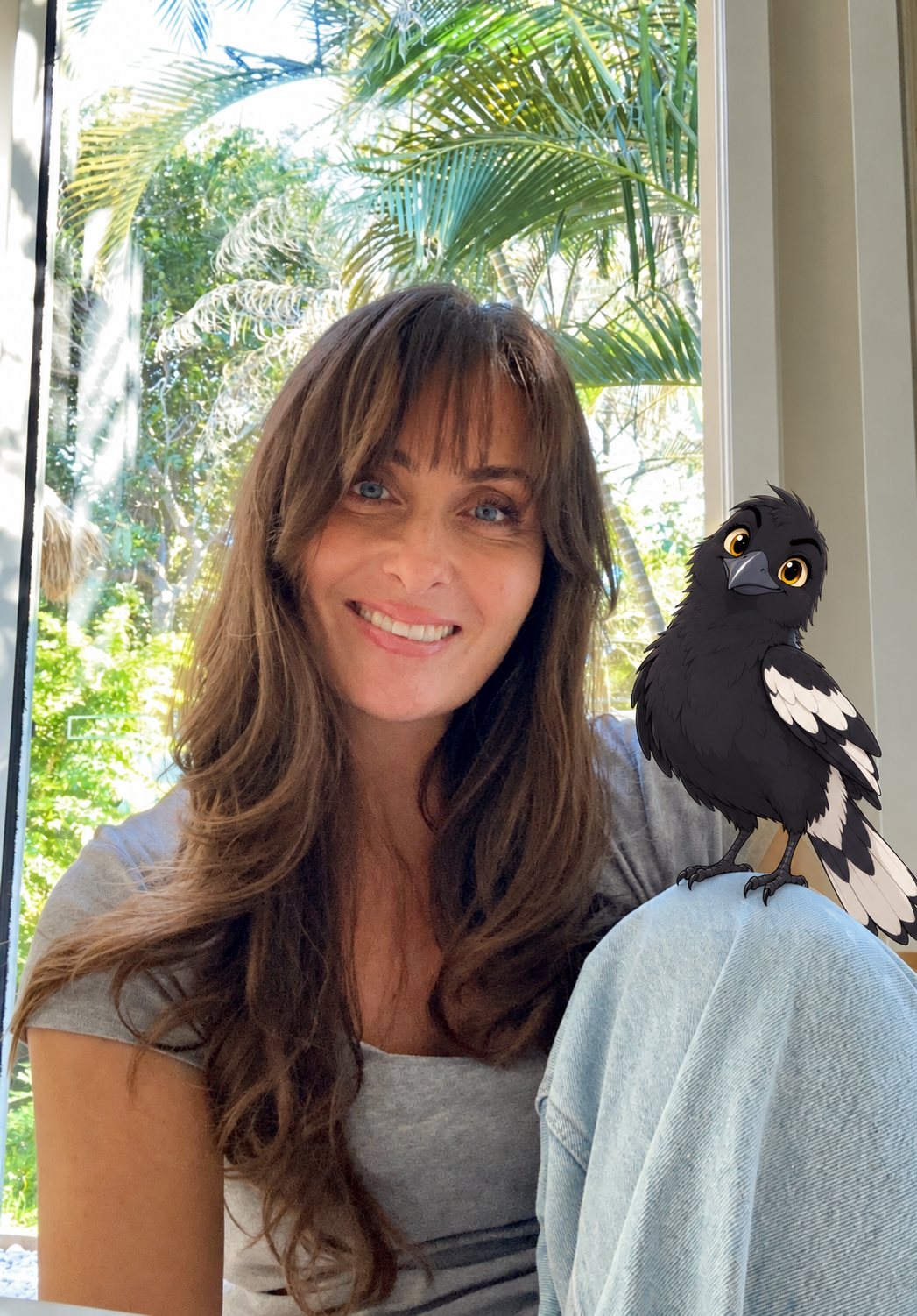
Currawong Publishing began with a family tree — although, looking back, perhaps the seeds were planted much earlier.
For years, I had been researching my children’s ancestry, following names, stories and branches back through the generations. One of the most remarkable discoveries was their great-great-grandfather, Arthur Gask, an Australian crime and mystery writer whose novels were once read around the world.
Naturally, I wanted to preserve his books for the family.
That proved harder than I expected. Original copies could be difficult to find and expensive when they appeared. With dozens of books to collect, building a complete family library would have cost thousands of dollars — assuming I could find them at all.
A few years earlier, I had already gathered together a personal collection of Gask’s newspaper short stories, so eventually a thought occurred to me: his work was now in the public domain. Why keep searching for expensive originals or settle for basic facsimile editions when I could carefully reproduce the books myself?
Initially, that was all I intended to do.
Then I wondered whether other people might like to own them too.
And Currawong Publishing began.
More Than a Reprint
From the beginning, I wanted these books to be more than reproductions of old text.
Arthur Gask was a member of our family, and I wanted his books presented with the attention and respect I would want given to any piece of family history. That meant researching the man behind the novels, exploring the world in which they were originally published, searching archives and newspapers, gathering historical material and creating editions that could offer modern readers something beyond the story itself.
By a wonderful coincidence, this project began taking shape exactly one hundred years after Gask introduced readers to his detective Gilbert Larose in 1926.
From that coincidence came The Gilbert Larose Centennial Collection — a carefully curated series created to preserve his work, explore the history surrounding it and introduce Gilbert Larose to another generation of readers.
What began as an attempt to build a family bookshelf had become a publishing house.
I Wanted to Make Books
There was another part of the story I had almost forgotten.
As a child, I loved making books.
I would spend hours typing out collections of songs and compiling them into my own songbooks. I traced pictures of existing characters and used them to invent new adventures. I made pop-up books where every page revealed another interactive part of the story.
Interestingly, I don't remember dreaming of becoming a writer.
I wanted to make books.
I loved the complete object — the words, pictures, pages, movement, order and experience of discovering what came next.
As adulthood arrived, so did life and insecurity. Although ideas for books continually appeared in my head, I never really thought of myself as someone capable of writing them. There always seemed to be an invisible gate between having an idea and believing I had the right to turn it into a book.
Starting Currawong Publishing unexpectedly removed that gate.
There was suddenly nobody I needed to convince that an idea was good enough before I was allowed to explore it. I could experiment, learn, change direction, make mistakes and exercise complete creative freedom.
In creating a publishing house, I had somehow given myself permission to create.
Within minutes of allowing myself that freedom, the central idea for The Tree That Looked Through the Window came to me.
The child who had once spent hours making little books finally had somewhere to go.
Where Old Meets New
Modern technology has been an important part of that journey.
Digital archives have given me access to books, newspapers and historical material that previous generations could have spent years trying to locate. The internet has made research possible across countries and collections from my own desk.
And artificial intelligence has opened another creative door.
There is understandable concern about technology replacing human work. My own experience has felt almost the reverse: these tools have enabled me to do work I never believed I could do.
They allow me to explore the characters and scenes that exist in my imagination, experiment visually, develop ideas, research, edit and learn. They have not supplied the reason I make books; they have helped remove some of the barriers between imagination and creation.
In a very real sense, technology has helped me become brave enough to finally make the things that have been swimming around in my head for years.
Yet after using some of the newest tools available, what I ultimately want to create is something wonderfully traditional:
a physical book.
Something carefully written, researched, illustrated and designed. Something printed and bound. Something that can sit on a shelf, be opened years later, handed to another person and perhaps passed through a family.
That combination of old and new has become central to Currawong Publishing — historical archives and emerging technology, inherited stories and new ideas, digital creation ultimately returning to paper, ink and binding.
What Currawong Publishing Is Becoming
Currawong Publishing remains intentionally small, personal and hands-on.
Its heart is the family tree: preserving worthwhile work from those who came before, creating new books in the present and leaving room for future stories from other branches and generations of the family.
That includes Arthur Gask's work, my own writing and, perhaps in time, books by members of our extended family.
With an international outlook as well as an Australian identity, I also hope to translate selected Currawong titles into other languages and allow these stories to travel further.
The name Currawong itself has its own story — born from the birds in my backyard and what their nest came to represent to me: fragments gathered from what came before and used to shelter what comes next.
It is an image that has come to describe this little publishing house remarkably well.
Currawong Publishing brings together the things I love: family, history, research, storytelling, creativity and the making of books.
It is purposeful.
It is creative.
And it is tremendous fun.
Most of all, it allows me to gather what came before, add something of my own, and make something worth passing on.
Any Questions?
Feel free to reach out.